
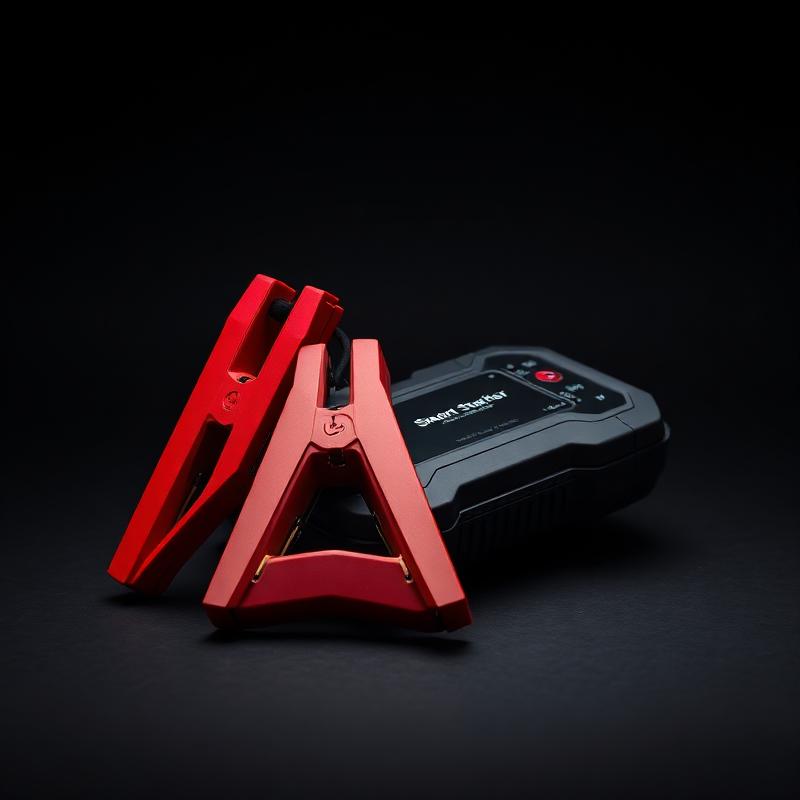
We are not listing jump starters at the moment. The guidance below is here so you can judge one properly whenever you buy — from us later, or from anyone else.
What a car jump starter is
A jump starter is a battery pack with heavy-duty clamps that delivers the short, high-current burst a starter motor needs to crank an engine. It does the job a second car and a set of jumper cables used to do, without needing the second car. Modern lithium units are small enough to live in a door pocket and usually double as a power bank and a torch.
How it works
Your car battery holds plenty of energy but delivers it slowly once it is discharged or cold. A jump starter's cells are built to dump several hundred amps for a couple of seconds — long enough to spin the starter. Once the engine runs, the alternator takes over and you disconnect the pack. Note what this means: a jump starter gets you moving, it does not repair or recharge a failing battery.
What to compare before buying
- Peak and cranking current. Peak current is a headline number; the sustained cranking figure is the useful one. Match it to your engine — a small petrol hatchback needs far less than a diesel SUV.
- Engine size rating. Reputable units state the petrol and diesel displacement they are rated for. Buy above your engine, not at the limit.
- Capacity in mAh or Wh. This decides how many attempts you get on one charge, and how useful the unit is as a power bank.
- Safety electronics. Reverse-polarity, short-circuit, over-current and spark protection should all be present. These are the features that stop a mistake becoming an expensive one.
- Clamp and cable quality. Thin cables and weak clamp springs lose current exactly when you need it.
- Self-discharge and recharge. A pack that sits in a car for months must hold charge. Plan to top it up every few months regardless.
Using one safely
- Switch the ignition and all accessories off.
- Connect the red clamp to the battery positive terminal, then the black clamp to an unpainted metal ground point on the engine or chassis — not directly to the negative terminal where possible.
- Switch the pack on and wait for its ready indicator.
- Crank for no more than three to five seconds, then wait at least thirty seconds before trying again.
- Once the engine runs, remove the black clamp first, then the red, and let the car run so the alternator can recover.
Never let the clamps touch each other while the pack is on, never attempt a jump start on a visibly swollen, leaking or frozen battery, and stop if you smell fuel.
If your car needs jump starting often
Repeated jump starts are a symptom, not a fix. A battery more than three or four years old, corroded terminals, a parasitic drain from an accessory, or a failing alternator are the usual causes and all of them are worth getting checked.